Blog

  • Mentally Stimulating Games While Walking Your Dog

    Taking a walk is always fun, but here are some fun games to keep your dog physically enthusiastic as well as sharpening up their grey matter…

    “Treasure hunt.” Take along his favorite treats and as soon as he gets distracted from you, toss one and tell him to “find the treat.” You might have to guide him the first few times, but this game is learned easily and teaches him to stay focused on you.

     “Pathfinder.” If you’ve gotten in a rut taking the same walk every day, chances are Fido’s as bored as you are. Vary your route and make it challenging. Climb stairs, walk on curbs, jump over small barriers, or even splash through some water. Keep his attention by abruptly changing direction and he’ll soon be keeping his eye on you!

    “Red light, green light.” You played it as a kid. Now teach it to your dog! As you walk, stop suddenly and say “red light!” (or whatever word you want to be the command). Sometimes go as soon as he sits at your side, and sometimes wait for a bit. Keep him off balance, never knowing what you’ll do next, and you’ll sharpen his attention right up.

    “Follow the leader.” Do you have a dog that insists on being out in front? This game will teach him who the leader is. Each time he heads out in his own direction, immediately change directions so he has to turn to catch up with you. Keep moving, but keep him following you.

    “Come!” While walking with your dog, suddenly reverse direction, running backward and calling his name. He’ll decide coming when called is a fun game, and it’s one of the most important things you can teach him.

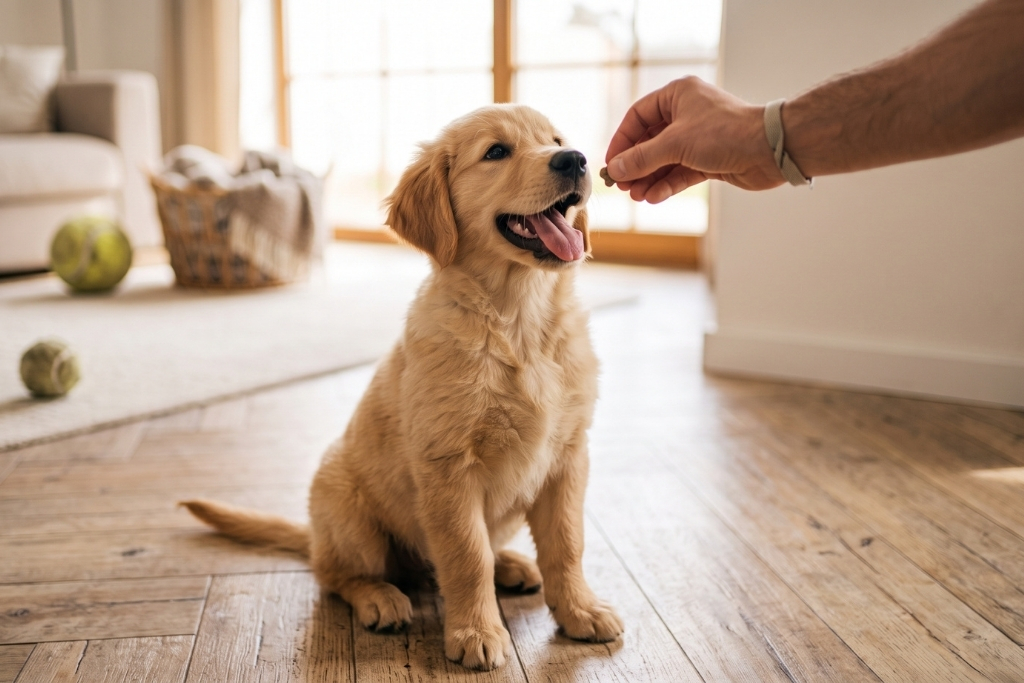
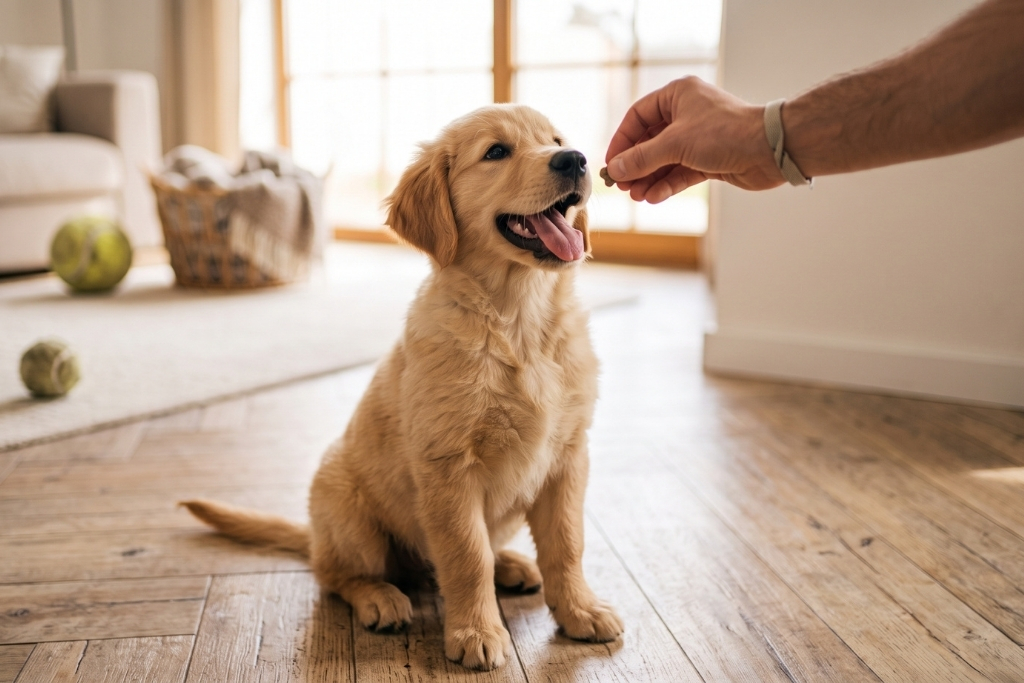
    “Push-ups.” At varying intervals, stop your walk and quickly have your dog sit, down, and sit again. Then break into a run or give him a treat. Soon he’ll be watching you closely to see what you’re up to next.

    “Dribbling.” Take along a soccer-ball when you walk your dog. Push it with your feet and let him push it around, too. Just be careful you don’t step on the ball or on Fido, either!

    “Flirt-pole.” A flirt pole is a long pole with a lure at the end. You dangle and dance it in front of him as you walk. He’ll love trying to grab the lure and you are always in control due to the length of the pole.

    “Parkour for dogs.” This urban agility training is so much fun for both you and your dog, it will turn the way you walk your dog on its head. Parkour combines dog agility with your daily walk to make his world (and yours) exciting and stimulating. He’ll jump, climb, balance, crawl under, and go around obstacles you see every day one every street in town. For detailed information, check out the International Dog Parkour Association website.
  • June 26 is National Take Your Dog to the Office Day!

    In 1999, when Pet Sitters International (PSI) suggested National Take Your Dog to the Office Day, it might have been a bit of a hard sell. After all, our fur babies do demand attention, particularly if they are young or not well socialized. But people around the nation agreed that our canine companions should have a special day and the first Friday after Father’s Day was set.

    Even though having your pal beside your feet might hinder your tasks a bit, there are three solid reasons for following this nationally recognized day. Perhaps pointing these out to your boss will make him (or her) a believer, too.

    1. The most obvious, of course, is that most people love dogs. They are often cute and winsome and their tails wag and eyes laugh whenever someone even looks their way. Her soft, fluffy coat or his silly expression draws people in and just makes them feel a bit happier. Naturally, you are filled with pride when others see your beloved pooch and make sweet remarks about him.
    2. This reason is the one that might win your boss. Positive interaction among coworkers has ratcheted up a notch when Fido breaks the ice with that shy colleague you’ve been unable to draw into a conversation. The team member you’ve thought you had nothing in common with shows her delight in your dog and introduces you to her own fur baby. Better communication and teamwork are surely tradeoffs for having your pup at work with you once a year.
    3. Another reason is that more and more frequently employers are allowing pets in the workplace. Why you ask? Well, it makes for a fun, happier environment as well as lowers stress levels of employees and creates an environment that is more flexible and creative. 
    4. Dogs in the workplace nurture productivity. When employees are less stressed and happier, they have a better chance of being productive and allows for the creative juices to flow. Dogs can create a camaraderie that may not have happened before and those relationships at work can spark new ideas. 
    5. Healthcare benefits abound! When people have dogs, they are shown to take more walks which reduces stress and obesity. Other health benefits are that with lower stress levels and healthier lifestyles, that reduces the amount of time that people spend at the physician’s office. Less time at the doctor means more time being productive and happier. Who doesn’t like happier, healthier employees? Plus, when pet parents are more proactive in their pet’s care, they also tend to be more proactive in their own health as well. 2 birds, 1 stone. Well, in this case, 2 dogs, one ball. 

    If you are the boss at work and would like more information about celebrating Take Your Dog to Work Day, a free tool kit is available for you to download, full of tips and resources to help make this special day a success. So grab your briefcase and a doggy bag of treats and set the pace for your company!

  • Pet Appreciation Week 2020

    No one knows for sure, but the best estimates by geneticists say the first domestic animal was the dog and at first they were just tamed wolves. That was between 13,000 and 30,000 years ago. Through the ages, dogs have evolved into many different breeds for many different purposes. The one thing they all have in common is that they can all be our closest friends and greatest allies. This is definitely one thing nature got right!

    Each year since 1981 we’ve set apart the first week in June to celebrate this amazing relationship. There is so much to appreciate about our four-legged buddies. They assist people every day to have a better life, from living more independently to recognizing signs of stress and illness. They lead the blind, hear for the deaf, and comfort the anxious. They find lost children and pull swimmers from the water. Dogs work alongside their humans on the police force, in the military, and one the farm. Guarding us and keeping us safe, they lay near our feet where they are the most content.

    We all grew up with noble canines like Lassie, Rin Tin Tin, Beethoven, Marley, and Toto. But the most important dog that ever lived is sitting by your side right now, happy to simply be in your presence. There is nothing the world can throw at us that can turn our dog’s devotion away from the human he adores and he doesn’t need wealth or fame to make his world perfect.

    So what will you do this year to show your dog how irreplaceable he is? Here are a few suggestions.

    ●  Feast your friend! Dogs are omnivores, meaning they need all kinds of food to get their proper nutrition. And while it’s best to stick to the diet you and your vet agree on, an occasional treat will be delightful to dogs. They can pretty much eat the same foods you do, but avoid sugar, alcohol, chocolate, grapes, raisins, garlic, macadamia nuts, onions, and the artificial sweetener Xylitol. Small portions, too, please!

    ●  Let your pooch splash in a “doggie pool” (kids’ pool).

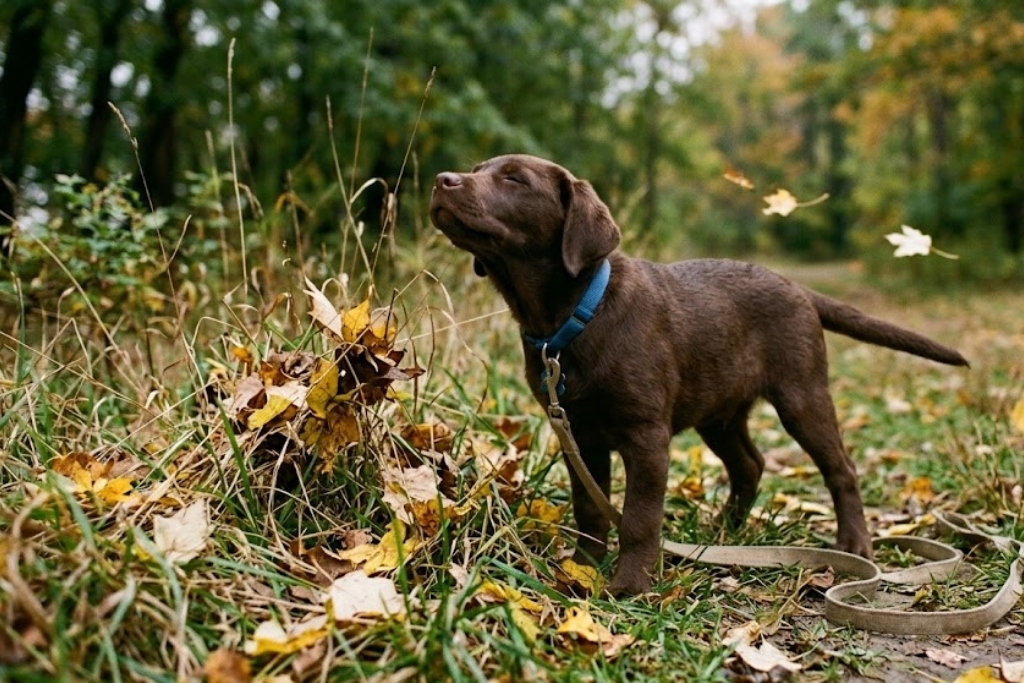
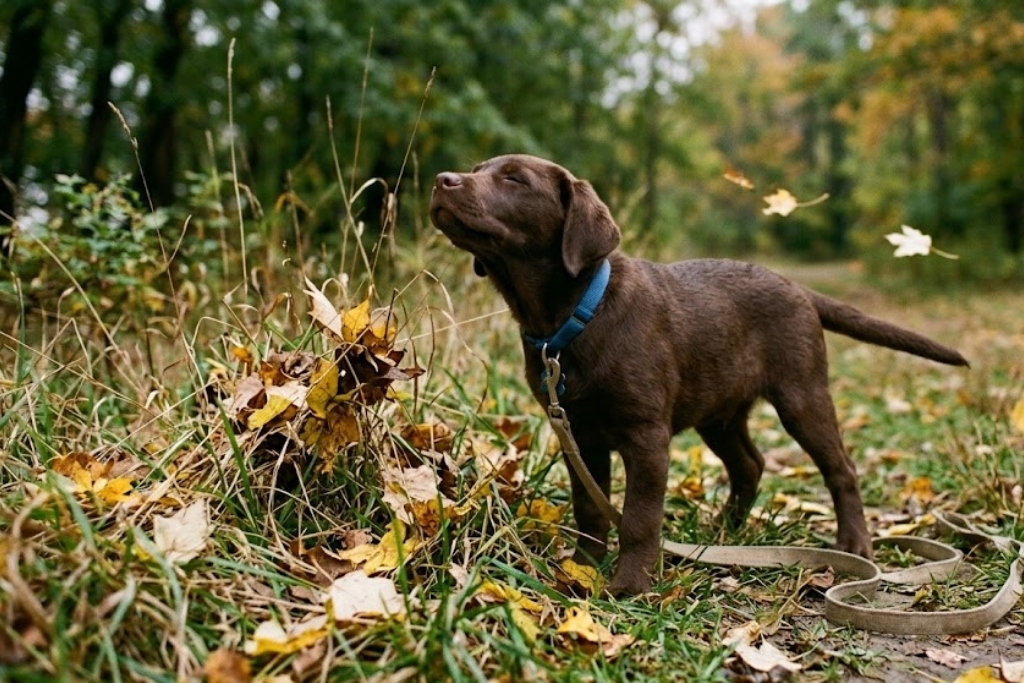
    ●  Take him for a walk and let him choose the direction and how long he gets to sniff a spot (he’s checking his “d-mail”)!

    ●  Get down on his level. Lie down on the floor with him. It’s so funny to watch his glee when he’s got you on his territory!

    ●  Take a ride in a car with partially open windows (but don’t let him put his head out).

    ●  Give him a long, satisfying scratch in all the places he loves it most.

    ●  Set up a doggy play-date and take him to the dog park to play with his friends. Let him do what he pleases and enjoy the summer sun with him.Maybe you’ve been appreciating other people’s pets until now, but this year is your year to get a dog of your own. Check out your local pet shelter or rescue group and get a friend that will appreciate you as much as you appreciate him!

  • Best Home-Made Treats for Your Dogs

    The summer has arrived and brought warm temperatures with it. While you’re out enjoying the beaches and hiking trails with your best friend, make sure that you’re both staying nourished and hydrated.  Here are some treats that both you and your pup can enjoy!

    Melon Berry Froyo Bones

    This simple, mouthwatering recipe is brimming with vitamins, antioxidants, and sweet flavor. Imagine a yummy, berry popsicle with the tangy addition of frozen yogurt.

    Ingredients:

    • An ice tray (you can find custom molds on Amazon)
    • 2 cups watermelon
    • 1/4th cup of water
    • Equal parts blackberries, raspberries, and strawberries (about 2 each) 
    • 1 cup yogurt

    What to do:

    First, use a spoon to stir the berries into a cup of yogurt and place the mixture in the fridge to chill. Grab your ice tray and fill it about a quarter of the way up with the watermelon mixture. It takes about 2 to 3 hours to freeze.

    Once the watermelon has frozen completely, take the ice tray out and fill the remaining space with your yogurt concoction and place it back in the freezer until solid. When you’re hanging out poolside, pop one of those babies out and break off a piece for your pup too. Cheers!

    Baked Pumpkin Poppers

    These tasty treats are more for our dogs than for us, as they don’t contain any added sugar. Even if you’re a beginner baker, you can’t mess these baked goodies up. Think of these as donut holes for pups!

    Ingredients

    • ½ a cup Flaxseed
    • 1/4th a cup pumpkin puree
    • 1/4th a cup peanut butter
    • 1 cup flour
    • 1 cup whole wheat flour
    • 2 tsp ground cinnamon
    • 1/4th water
    • 2 bowls, an oven, and a pre-sprayed baking sheet

    What to do:

    Preheat your oven to 325 degrees.

    Mix the flour and whole wheat flour in one of your bowls. Use the second bowl to thoroughly stir the flax seed into the water. It’s important not to skip this step! Mixing the wet and dry ingredients too soon will make it difficult to merge them later on.

    Add the peanut butter, pumpkin puree, and cinnamon to the wet ingredients. Once you’ve got a thick paste going, you can slowly begin mixing in the flour. Take your time and be sure not to rush this step; by now, you should have almost a cookie-dough texture. Use your hands to knead out any dry patches of flour.

    Roll your dough into small, donut-hole sized balls and place them onto your baking sheet. Since there isn’t any baking soda included, you don’t have to set them very far apart as they won’t expand.

    Depending on your oven, these treats could take 15-21 minutes to cool, so continue to keep an eye on them during that timespan. If you’ve got a senior pup, you can take them outright at the 15-minute mark for a softer, easier to chew option.

    Coconut Carob 

    Something about the taste of chocolate and bananas is just so satisfying, isn’t it? Our dogs can’t eat cocoa derivatives, but carob is the next best thing. You and your best friend can eat this recipe frozen or chilled.

    Ingredients:

    • 2-3 bananas
    • 3/4th a cup of peanut butter
    • 1-2 TBSP of carob for flavor
    • An ice tray

    Start by mashing up your bananas and stirring them into the peanut butter, if you have a hand-mixer, go ahead and use it for this step. However, you can also use a fork or spoon. Then, add the carob; this part is really at your discretion. If your dog has never had it before, consider making your first batch with one tablespoon and see how it goes.

    Place the mixture into an ice mold and allow them to freeze. If you don’t have one, you can always allow the blend to chill in the fridge for a few hours so that it’s not completely frozen. Once cold, add it to your dog’s breakfast, and throw a spoonful into your oats for a yummy wake-up meal!

  • Best Cat Breeds for Active People

    We mostly find them indoors napping along a window sill, but cats love their exercise just as much as we do! If you’re looking for a furry friend to accompany you on adventures but you’re not much of a dog person, why not try a cat instead? Believe it or not, our tiny, domesticated lions and tigers haven’t lost their touch. Even in their smaller size, they’re still keen, highly intelligent hunters. 

    Here are some of the most active breed varieties, don’t let the dog lovers have all the fun!

    The Bengal

    These felines aren’t just loving companions, they’re true-blue athletes. Not only do they love to jump about and sit atop a high perch, but Bengal cats are also avid swimmers. Take them out to the family’s favorite lake or for a beach-side excursion and watch how quickly they take to the water. 

    It’s best to keep them leashed outdoors as Bengals have a high prey drive. Should your kitty find themselves distracted by a bird or a squirrel, it’s likely that they’ll chase their target up a tree without a second thought.

    The Abyssinian 

    Owners who enjoy playing a game of catch will love the Abyssinian breed. Brightly colored and noisy balls, ropes, faux-mice, and spin-machines are perfect tools for interacting with your Abyssinian. They’re considered to be highly intelligent, smarter than most other breeds of felines, and in need of a challenge.

    Like a dog, the Abyssian excels at following commands and learns how to do tricks rather quickly. While you’re at work, these kitties are more than happy to entertain themselves. Just don’t leave them alone for too long, or they’ll make use of toys that belong to you.

    Oriental Shorthair

    If ever there were a cat that could be a best friend to your little ones, it’s the Oriental Shorthair! This especially true for the Harry Potter fans of the family considering how much they resemble the house elf, Doby. 

    This extremely vocal breed has large, fox-like ears that are perfect for a few hours of hide and seek. Like the Bengal, Shorthairs are instinctively inclined to chase anything moving at high speeds. 

    Get a feathered throw toy and watch them go after it again and again. The Oriental Shorthair enjoys the water, and will likely follow you right into the bathtub. Just be careful to dry up any water that ends up in those massive ears!

    The Burmese
    These googly, green-eyed cats behave like an extra shadow. All they want is to be right next to their owner and included in whatever it is they’re up to. Burmese cats are among the most powerful domesticated breeds despite their fluffy appearance.

    That said, these guys are gentle giants. They’re highly social, happily scoping new faces and surroundings. If you plan on taking them outdoors for a walk around the neighborhood or to explore the backyard, keep them leashed! These kitties have their own agenda and will quickly wander away if left unattended.

  • 12 Fun Things To Do With Your Dog This Summer

    Summertime and the living is easy… or it should be, anyway. When the sun turns up the heat, finding things to do that are fun and safe is sometimes a challenge. Here are 12 activities we recommend that will make this the best summer ever for you and your fur buddy.

    1. Go take a hike! Seriously. Take your dog with you and hike shady trails. Finding places that are dog-friendly to hike is no problem since the world is at our fingertips online. But to make things even easier, here are some awesome National Parks that allow dogs on the hiking trails. Check out the websites for particulars about hours, rules, and restrictions.
      Yosemite National Park
      Grand Canyon National Park
      Mammoth Cave National Park
      Great Sand Dunes National Park
      Petrified Forest National Park
      North Cascades National Park
      Shenandoah National Park

    Cuyahoga Valley National Park

    Acadia National Park

    1. Camp out in the wilds. Take Fido on your annual camping retreat or just overnight. Dogs love it when we enter their world, and camping with your pup is sheer heaven to him. Here are the simple rules:

      Never leave him alone. Your fur buddy should not be left behind when you leave camp, even for a short while. Keep Fido on his leash in camp. Most parks and camping areas have a six-foot rule, which means the leash can’t be any longer than that.

      Pack it out. Human waste and dog waste alike should be removed in plastic bags.

      Snuggle down together. Most places require your dog to be with you in your tent or your car when sleeping.

      Provisions for your pet. You can let your dog carry his own backpack, but be sure you pack it with a bowl, water, and kibble for him to eat.

    2. Backyard BBQ and splash party. A fenced yard allows you to barbecue your dinner outside in the cooling evening, and your pup will have fun splashing in his doggy-pool or trying to catch the sprinklers while it’s still hot, too.

    3. Make frozen treats together! Even the kids can get in on this one, and believe it or not, our list of frozen treats are kid-friendly, too.

    4. Shoot your dog. Okay, we mean with a camera, of course! Here are some helpful tips to get those Instagram-worthy photos of life with Fido. The number one tip from professional photographers is “take lots of photos.” Turn off the flash. Get down on his level, and get playful.

    5. Water sports. Taking your dog to the beach or a lake can be the most fun you’ll have all summer. Three things to remember: Give him water to drink. Lots of it. Give him someplace to get out of the sun (an umbrella, a tree). His feet get hot, too. Let him rest on a towel where his feet can cool off when he’s not splashing in the water.

    6. Teach that old dog a new trick. In just minutes a day, you can teach a new trick to Fido. Keep the sessions short and stop before he’s bored.

    7. Have a picnic. Many parks have facilities for picnics. If allowed, your pup will enjoy spending time with his two favorite things: you and food.

    8. Tour area dog parks. Look for parks with shade and grass to play in.

    9. Check out Starbucks® secret menu and treat him to a Puppuccino
      .
    10. Join PupScouts and find friends and activities to earn badges together. Scouting was never this fun!

    11. Take him out to the ballgame! Here are some dog sports that use balls. Flyball, catch ball, diving for balls, and of course, chasing one as many times as you throw it (but play in the early morning or late evening so he doesn’t get overheated).
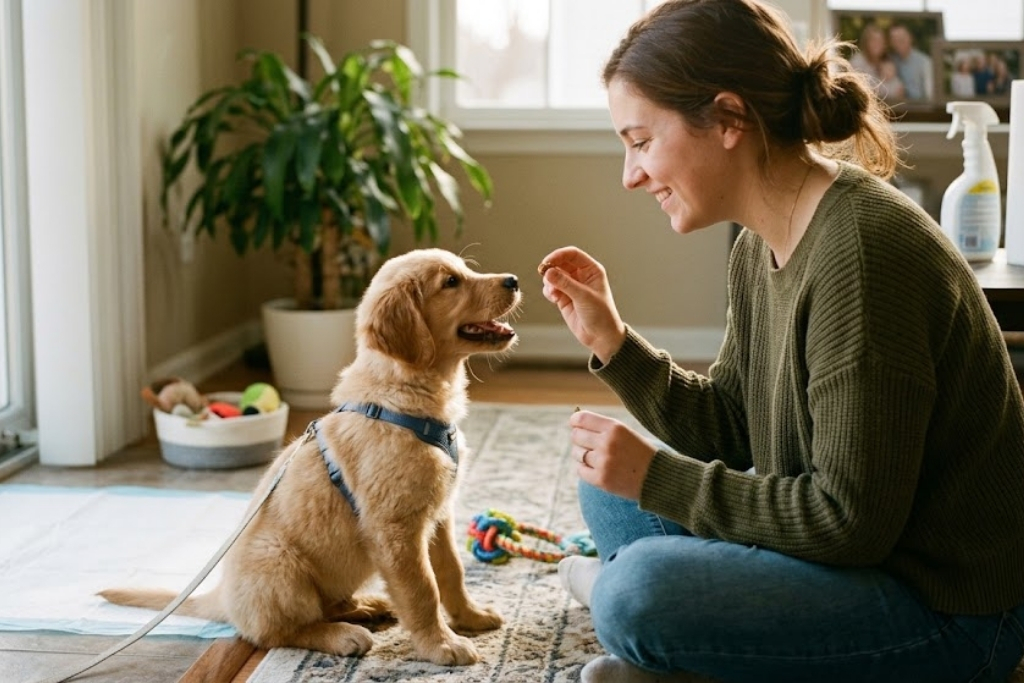
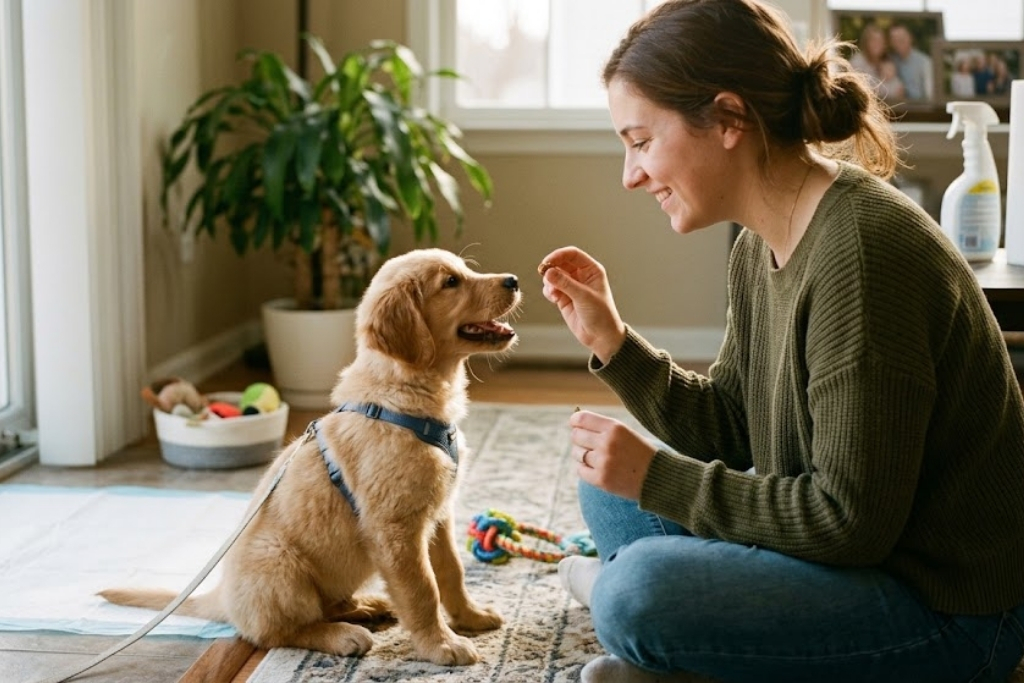
  • 8-Week-Old Puppy Potty Training Schedule: What to Expect

    8-Week-Old Puppy Potty Training Schedule: What to Expect

    Your puppy is home, and life suddenly runs on a very different schedule.

    Meals happen at specific times. Naps seem to happen everywhere. And potty breaks? There are a lot of them.

    For many new puppy owners in Old Bridge, potty training is one of the biggest concerns during those first few weeks. You may be wondering if your puppy is learning fast enough or if the number of accidents you’re seeing is normal.

    At eight weeks old, most puppies are still in the very early stages of potty training. The goal isn’t perfection. The goal is consistency.

    Why Potty Training Looks Different at 8 Weeks

    An 8-week-old puppy is still developing bladder and bowel control. Most puppies at this age need frequent trips outside and won’t reliably signal when they need to go.

    That means management is just as important as training.

    A predictable routine helps your puppy learn where they should go while reducing opportunities for accidents indoors. Whether you’re settling in near laurence Harbor, Madison Park, or another Old Bridge neighborhood, consistency is one of the most important parts of the process.

    A Realistic Daily Potty Training Schedule

    Most 8-week-old puppies should go outside:

    * Immediately after waking up

    * Shortly after eating or drinking

    * After play sessions

    * Before going into their crate

    * Right before bedtime

    * Every one to two hours throughout the day

    If your puppy has an accident, it doesn’t necessarily mean they’re falling behind. More often, it’s a sign that potty breaks need to happen more frequently.

    Many families throughout Old Bridge find that setting reminders during the first few weeks can help establish a reliable routine.

    What Progress Looks Like During the First Few Weeks

    Many puppy owners expect potty training progress to happen quickly. In reality, the first victories are often small.

    You may notice your puppy having fewer accidents in the same room. Some puppies begin heading toward the door before they need to go. Others start using the same outdoor potty area consistently.

    These are all positive signs that the routine is starting to make sense.

    Whether you’re spending afternoons at home near Route 9 or enjoying time in neighborhoods closer to Cheesequake State Park, those small improvements are worth celebrating.

    Common Potty Training Challenges

    Frequent Accidents

    This is completely normal at eight weeks. Young puppies simply don’t have the physical ability to “hold it” for long periods.

    Potty Breaks That Turn Into Playtime

    Many puppies become distracted outdoors. If this happens, keep potty trips short and bring your puppy to the same area each time.

    Success One Day, Accidents the Next

    Progress is rarely linear. A good day followed by a difficult one is a normal part of the learning process.

    Three Habits That Help Puppies Learn Faster

    Stick to a Consistent Schedule

    The more predictable the routine, the easier it is for your puppy to learn.

    Reward Success Immediately

    Praise and treats should happen right after your puppy goes in the correct spot. Timing matters.

    Supervise Indoors

    When your puppy is awake, keep a close eye on them. Catching early signs that they need to go outside can help prevent accidents.

    Helping New Puppy Owners in Old Bridge

    The first few months with a puppy come with plenty of questions, and potty training is usually near the top of the list.

    At PetCenter in Old Bridge, we’re here to be a resource long after your puppy comes home. From feeding and training advice to helping families prepare for common puppy milestones, our team is committed to helping owners feel confident during those important early weeks.

    We proudly work with families throughout Old Bridge and nearby communities, helping new puppy owners navigate everything from potty training to everyday puppy care.

    Patience and Consistency Go a Long Way

    At eight weeks old, your puppy is still learning the basics. A reliable routine, realistic expectations, and plenty of repetition can make a significant difference.

    Focus on consistency now, and you’ll be laying the foundation for good habits that last well beyond puppyhood.

    Hungry for more? The next chapter’s even better! Follow the paw prints below to keep reading.

    Puppy’s First Vet Visit: What New Owners Should Expect
    Behind the Scenes: How PetCenter Cares for Puppies Every Day

  • The Puppy Summer Camp Yearbook

    The Puppy Summer Camp Yearbook

    By this point in the summer, your puppy has probably built a reputation.

    Not an official one.

    Just the kind where everyone in the house immediately says, “Yep, that sounds like him.”

    Maybe they’re the puppy who tries to befriend every living thing. Maybe they’re the puppy who turns every water bowl into a recreational activity. Maybe they’re the puppy who somehow finds the one weird object in the yard and decides it belongs in their mouth.

    You know. That puppy.

    Which made us wonder: if puppies had a summer camp yearbook, what awards would they win?

    After careful observation and absolutely zero scientific oversight, we’ve reached some conclusions.

    The Official Puppy Summer Camp Awards

    While every puppy is unique, behavior experts agree that dogs often develop distinct personality traits. Some are naturally outgoing. Some are more cautious. Some seem determined to turn every ordinary afternoon into a memorable event.

    Here are the campers who stood out this summer.

    Most Likely to Eat Something They Absolutely Shouldn’t

    This puppy doesn’t ask questions. They commit.

    A leaf blows by? Chomp.

    A stick appears? Chomp.

    Something mysterious falls out of a beach bag? Also chomp.

    Curious puppies often explore with their mouths. It’s a completely normal part of learning about the world. It is also the reason we all say, “WHAT’S IN YOUR MOUTH?” at least once a day.

    Best Zoomies After Quiet Time

    You looked over. They were asleep. Five seconds later, they’re running through the house like they’ve just received urgent news.

    No warm-up. No explanation. Just immediate acceleration.

    High-energy puppies often release excitement in short bursts, especially after resting. Summer seems to amplify this phenomenon by approximately 400%.

    Most Likely to Befriend a Garden Hose

    This puppy has never met a stranger.

    Not a person. Not a dog. Not a sprinkler. Not a lawn ornament.

    Everything is a potential friendship opportunity.

    Social puppies tend to approach new experiences with confidence and curiosity. They’re often eager to investigate whatever is happening around them.

    Sometimes repeatedly.

    Most Dramatic Response to Minor Inconvenience

    The food bowl was not filled quickly enough. A door closed. Someone sat in their favorite spot.

    The tragedy.

    The injustice.

    The emotional devastation.

    Highly expressive puppies are often very tuned in to routines and household activity. They’re also exceptionally talented at making sure everyone knows when they have concerns.

    Best Cannonball Into the Water Bowl

    Technically, the water bowl exists for drinking. This puppy disagrees.

    Every refill becomes an event. Paws go in. Water comes out. Nobody stays dry.

    Many playful puppies enjoy interacting with water, especially during warmer months. Some simply take that enthusiasm to championship levels.

    Future Camp Director

    This puppy is somehow involved in everything. They’re supervising snack preparation. Inspecting grocery bags. Monitoring family activities. Conducting random security checks on household items.

    Confident puppies often enjoy engaging with their environment and figuring things out.

    This one just believes they’re running the place.

    Most Likely to Start a Game Nobody Asked For

    You were folding laundry. Now you’re playing chase.

    You were watering the garden. Now you’re playing chase.

    You were trying to sit down for five consecutive minutes.

    Good luck.

    Some puppies are natural initiators. They thrive on interaction and love creating opportunities for engagement.

    Even if those opportunities were not requested.

    Final Award of the Summer

    After much consideration, we’ve decided to add one final category.

    Most Likely to Keep Us Laughing

    Every puppy wins.

    The weird-object collectors.

    The water bowl cannonballers.

    The self-appointed camp directors.

    The professional troublemakers.

    The puppies whose names are followed by “What are you doing?” at least twenty times a day.

    Summer with a puppy is messy. It’s loud. It’s occasionally confusing.

    But it’s never boring.

    So congratulations to all this year’s winners. Your prize is one slightly chewed tennis ball and absolutely no additional privileges.

    See you at camp next year!

    Hungry for more? The next chapter’s even better! Follow the paw prints below to keep reading.

    Your Dog’s Summer Job Would Definitely Be…
    The Ultimate Dog Mom Resume: Are You Qualified for the Best Job Ever?

  • New Puppy Checklist: Everything You Need Before Day One

    New Puppy Checklist: Everything You Need Before Day One

    Deciding to bring home a puppy is exciting. It’s also a big decision. Once you’ve found the right puppy, your mind naturally starts racing through everything you need to do before they arrive.

    Do I have the right supplies? Is my home ready? What will those first few days look like?

    A little preparation can make a big difference. Having the essentials in place before day one helps your puppy settle in more comfortably and allows you to focus on building a positive routine from the start. At Petland, we often remind new puppy owners that preparation is one of the best ways to set both you and your puppy up for success.

    The Ultimate Puppy Checklist

    1. Food and Water Bowls

    Choose sturdy, easy-to-clean bowls that won’t tip easily. Fresh water should always be available, and having the right feeding setup helps establish healthy habits from the beginning.

    2. Puppy Food

    Ask what food your puppy is currently eating and have it ready before they arrive. Sudden changes in diet can sometimes cause digestive upset. If you plan to switch foods, do so gradually over time. If you’re bringing home a puppy from Petland, our team can provide guidance on your puppy’s current diet and feeding recommendations.

    3. A Comfortable Place to Sleep

    Puppies need plenty of rest as they grow and develop. A comfortable bed or designated sleeping area gives them a consistent place to relax and feel secure in their new environment.

    4. A Crate or Safe Puppy Space

    A crate can support house training and provide a quiet place for your puppy to rest. You may also want to create a puppy-safe area using gates or a playpen while they learn the rules of their new home.

    5. Collar, Leash, and ID Tag

    Even young puppies should have proper identification. A well-fitted collar and lightweight leash also help your puppy become comfortable with handling and early training experiences.

    6. Training Treats

    Positive reinforcement is one of the most effective training tools available. Small, puppy-friendly treats can help reward desired behaviors and encourage learning from day one.

    7. Toys for Play and Teething

    Puppies explore the world with their mouths. Appropriate chew toys can help soothe teething discomfort while giving your puppy a safe outlet for natural chewing behaviors. Interactive toys also help keep curious minds engaged.

    8. Grooming Essentials

    Depending on your puppy’s breed and coat type, you may need brushes, puppy shampoo, nail care tools, or dental products. Introducing grooming routines early can help puppies become more comfortable with regular care throughout their lives. A Petland pet counselor can help recommend grooming products that are appropriate for your puppy’s age, breed, and coat type.

    9. Cleaning Supplies

    Accidents are a normal part of puppyhood. Having pet-safe cleaning products on hand can make cleanup easier and help remove odors that may attract puppies back to the same spot.

    10. A Veterinary Care Plan

    Your Petland puppy has been under the care of a veterinarian since birth, and each Petland location has a state-licensed consulting veterinarian who has cared for the puppy from the time it arrived. An initial wellness exam with the recommended vet, or with your established family veterinarian is highly advised, and required within the timeline indicated in Petland’s New Puppy Warranty. Regular veterinary care plays an important role in supporting your puppy’s long-term health and development. Many Petland families find that establishing veterinary care before bringing their puppy home helps make the transition even smoother.

    Support Beyond Puppy Day

    Preparing your home is only part of the process. Having access to knowledgeable guidance can make a difference as you navigate training, nutrition, wellness, and daily care.

    At Cosmick Media SEO Blogs, we’re here to help you find the right puppy for your lifestyle while providing resources and support long after adoption day. Whether you’re welcoming your first puppy or adding another dog to your family, our team is committed to helping you start off on the right foot.

    Ready to Welcome Your Puppy Home?

    The more prepared you are before day one, the smoother the transition will be for both you and your puppy. With the right supplies, a safe environment, and trusted guidance, you’ll be ready to give your new puppy a confident start in their new home. Visit your local Petland location to learn more about available puppies and the resources available to help your growing family.

    Hungry for more? The next chapter’s even better! Follow the paw prints below to keep reading.

    Myth Busting: Why Petland is a Good Choice When Bringing a Puppy Home

    What To Know About Third-Party Puppy Financing Options at Petland

  • New Puppy Checklist: What to Have Ready Before Day One

    New Puppy Checklist: What to Have Ready Before Day One

    The happy decision has been made. You’re bringing home a puppy.

    Now comes the part that catches many people by surprise: getting ready for them.

    Most new puppy owners spend plenty of time thinking about breeds, personalities, and names. Then reality sets in. Where will they sleep? What should they eat? Do you have everything you need before they walk through the door?

    A little preparation now can make those first few days much smoother. It can also help your puppy settle into their new environment with less stress and more confidence. For families throughout Stuart, Boca Raton, and surrounding South Florida communities, having a plan in place can make all the difference.

    Before Your Puppy Arrives, Check These Essentials Off Your List

    Create a Dedicated Space

    Your puppy doesn’t need access to the entire house right away. A designated area gives them a place to rest, play, and adjust to new surroundings.

    This could be a crate, playpen, or puppy-proofed room. Having a consistent space can help establish routines early.

    Whether you live near Downtown Stuart, Palm City, East Boca, or Boca Del Mar, creating a quiet, comfortable area can help your puppy feel secure from day one.

    Choose the Right Food

    Ask what food your puppy is currently eating and have it ready before bringing them home.

    Keeping meals consistent during the first few weeks can help avoid unnecessary digestive upset while your puppy adjusts to a new environment.

    Set Up Food and Water Stations

    Pick a location that’s easy for your puppy to access and easy for you to keep clean. Establishing consistent feeding areas helps create structure from the start.

    Many South Florida families find that keeping food and water stations in the same location helps puppies settle into a routine more quickly.

    Stock Up on Chew Toys

    Puppies explore the world with their mouths. They also go through teething.

    Having appropriate chew toys available can help redirect chewing away from furniture, shoes, and other household items while providing mental enrichment.

    Prepare for Potty Training

    Accidents happen during the early stages of puppyhood.

    Puppy pads, enzymatic cleaners, and a plan for regular potty breaks can make the process more manageable. Consistency is one of the most important factors in successful potty training.

    Families living near Sewall’s Point, Jensen Beach, or Boca Raton neighborhoods close to Red Reef Park often find that establishing a dedicated potty area early helps reinforce good habits.

    Have a Collar, Leash, and ID Tag Ready

    Even before neighborhood walks become part of the routine, your puppy should have proper identification.

    Early introductions to collars and leashes can also help build confidence and familiarity.

    Gather Basic Grooming Supplies

    Depending on your puppy’s coat type, you may need a brush, nail care tools, puppy-safe shampoo, and dental products.

    Introducing grooming gradually helps puppies become more comfortable with handling as they grow.

    Schedule a Veterinary Visit

    One of the first items on your calendar should be a wellness exam with a trusted veterinarian.

    Regular preventive care helps support healthy growth and provides an opportunity to discuss nutrition, vaccinations, and developmental milestones.

    Local Support for New Puppy Owners

    Whether you’re preparing for life with a puppy in Stuart, exploring the neighborhoods around Downtown Stuart, or getting ready for walks near Mizner Park in Boca Raton, preparation goes a long way.

    At Wags About You, we love helping families find a puppy that fits their lifestyle. Just as importantly, we enjoy helping owners feel prepared for everything that comes next. Questions about supplies, routines, nutrition, or training are all part of the conversation.

    We proudly serve puppy owners throughout Stuart, Boca Raton, Palm City, Jensen Beach, Deerfield Beach, and surrounding communities.

    Start Day One With Confidence

    No home is ever perfectly prepared for a puppy. That’s part of the fun.

    However, having the essentials in place before your puppy arrives allows you to focus less on what you’re missing and more on the best part: Getting to know the newest member of your household.

    More Helpful Reads From Wags About You From planning and preparation to everyday puppy care, our articles are here to help you feel informed and confident as a pet parent. Check out the related posts below to keep learning with us.

  • Puppy Leash Training: How to Stop Pulling and Freezing

    Puppy Leash Training: How to Stop Pulling and Freezing

    The first few weeks with a puppy are full of milestones. The first night at home. The first successful potty break. The first time they learn their name.

    Then comes one that many new puppy owners look forward to most: the first walk.

    You picture strolling through the neighborhood together. Instead, your puppy plants all four paws on the ground and refuses to move. Or they pull ahead like they’re training for a marathon.

    If that sounds familiar, don’t worry. Both reactions are completely normal.

    For puppies, the outside world is full of new sights, sounds, smells, and experiences. Learning how to walk on a leash takes time, patience, and practice. Whether you’re exploring your neighborhood in Indianapolis, Schererville, or a nearby community, those first walks are a big learning experience for your puppy. 

    Why Puppies Pull or Freeze on Walks

    Imagine seeing a busy sidewalk, passing cars, rustling leaves, and unfamiliar people for the very first time. That’s what many puppies experience during their early walks.

    Some puppies respond by pulling forward to investigate everything around them. Others become overwhelmed and freeze in place.

    Neither reaction means your puppy is stubborn or difficult. More often, they’re simply processing a lot of new information at once.

    For puppies living near bustling areas like Broad Ripple, Downtown Indianapolis, or Schererville’s busy commercial corridors along US-41, there can be even more sights and sounds to take in.

    If Your Puppy Pulls Ahead

    Pulling is common because puppies naturally want to move toward something interesting.

    When your puppy starts pulling, avoid pulling back on the leash. Instead, stop walking. Once the leash becomes loose again, continue forward. This teaches your puppy that pulling doesn’t get them where they want to go. A loose leash does.

    Consistency is important. The lesson becomes much clearer when the same rule applies every time.

    Many families find it helpful to practice in quieter areas first, whether that’s a neighborhood sidewalk in Fishers, Carmel, St. John, or Schererville.

    If Your Puppy Refuses to Move

    Freezing can be just as common, especially during the first few walks.

    If your puppy stops, give them a moment to look around and process their surroundings. Encourage them with a happy voice and reward even a few steps forward. Avoid dragging or forcing your puppy to move. Building confidence is more effective than creating pressure.

    Many puppies become more comfortable after a few short outings.

    Start Small and Keep Walks Short

    One of the biggest mistakes new owners make is expecting too much too soon. Early leash walks don’t need to be long. A few minutes around the yard, driveway, or quiet sidewalk can be enough.

    For families in Indianapolis, that might mean practicing close to home before exploring busier areas near Broad Ripple, Fountain Square, or downtown. In Schererville, a quiet neighborhood stroll is often a better starting point than a crowded weekend outing near Lincoln Highway or popular shopping areas.

    Small successes build confidence.

    Make Every Walk a Learning Opportunity

    Bring treats. Reward attention. Celebrate calm behavior.

    Most importantly, remember that leash training is a skill. Your puppy isn’t expected to master it overnight.

    With repetition, many puppies begin to understand what is expected and become more comfortable walking beside you.

    Helping Families Start Strong

    At Happiness Is Pets, we love seeing families reach these exciting milestones. Finding the right puppy is only the beginning. Learning, growing, and building confidence together is where the real fun begins.

    Whether you’re welcoming a puppy in Indianapolis, Schererville, Fishers, Crown Point, or a nearby community, our team is here to answer questions and provide guidance as your puppy learns the ropes.

    One Step at a Time

    The first leash walk may not look exactly how you imagined it. That’s okay.

    Every puppy starts somewhere. With patience, positive reinforcement, and realistic expectations, those early stops, starts, and zigzags eventually become enjoyable walks you’ll both look forward to.

    If you’re up for another read, these posts are popular with puppy parents:

  • The Puppy Summer Complaint Department

    The Puppy Summer Complaint Department

    Summer with a puppy is wonderful.

    It’s sunshine, backyard adventures, long walks, cold water bowls, and approximately 7,000 photos of your puppy doing something adorable.

    It’s also become increasingly clear that puppies have opinions.

    Strong opinions.

    In fact, if puppies could file official complaints during the summer months, we suspect many of them would. Frequently. Possibly in writing. Possibly with legal representation.

    Which is why we’ve decided to open the Puppy Summer Complaint Department and review some of this season’s most common grievances.

    After careful investigation, we can confirm that many of these complaints are completely ridiculous.

    We can also confirm that your puppy is absolutely serious about them.

    Complaint #1: The Sun Is Following Me

    Filed by: Every puppy who has ever walked across a driveway in July.

    According to the complaint, the ground is warm, the air is warm, and somehow the giant glowing object in the sky refuses to leave them alone.

    To be fair, puppies can be more sensitive to heat than we sometimes realize. That’s why shade, fresh water, and avoiding the hottest parts of the day are important during summer outings.

    Still, we’d like to note that the sun has been operating this way for quite some time.

    Complaint #2: The Water Bowl Was Full and Now It’s Empty

    Filed by: The puppy who spent fifteen minutes splashing in it.

    This puppy believes someone should investigate why their water bowl keeps running out. Unfortunately, security footage reveals that they personally removed most of the water using both paws.

    Many puppies enjoy playing with water because it’s stimulating, cooling, and honestly pretty entertaining.

    The good news? They’re having fun.

    The bad news? Your kitchen floor is now a wetland ecosystem.

    Complaint #3: The Sprinkler Is Acting Suspicious

    Filed by: The self-appointed head of neighborhood security.

    This complaint includes 47 pages of evidence and three blurry photographs.

    Some puppies approach new objects with curiosity. Others approach them like undercover detectives investigating an international incident.

    Both reactions are normal. Confident exploration is part of how puppies learn about their environment.

    The sprinkler, however, remains innocent until proven guilty.

    Complaint #4: Everyone Keeps Saying “Leave It”

    Filed by: The puppy carrying something alarming.

    The complaint argues that if puppies aren’t supposed to investigate random sticks, mulch, leaves, pinecones, and mystery objects, those items should stop appearing outdoors.

    Unfortunately, that’s not how nature works.

    Puppies naturally explore the world with their mouths. Redirecting that curiosity toward safe toys and chews helps satisfy the urge without turning every walk into a hostage negotiation.

    Complaint #5: Bedtime Has Been Scheduled Far Too Early

    Filed by: Every overtired puppy experiencing evening zoomies.

    Many puppies become extra energetic when they’re actually exhausted.

    It sounds backwards. It IS backwards.

    Yet somehow that’s puppy logic.

    Regular naps and predictable routines often help prevent those nightly laps around the coffee table.

    We Respect All Complaints

    The truth is that every puppy experiences the world a little differently.

    Some are cautious. Some are adventurous. Some are convinced the garden hose is their best friend. Others are convinced it’s their greatest enemy.

    That’s part of what makes them so entertaining.

    We love helping families understand these quirky behaviors because behind every complaint, dramatic reaction, and suspicious investigation is a puppy learning about the world one experience at a time.

    Department Closed for the Day

    At least temporarily.

    We’ll reopen tomorrow when someone files an urgent complaint about a closed bathroom door, a missing tennis ball, or the unacceptable delay between dinner and second dinner.

    Until then, summer remains under puppy supervision.

  • Puppy Crate Training: How to Make the Crate a Happy Place

    Puppy Crate Training: How to Make the Crate a Happy Place

    A puppy is officially part of the family. They’re learning the sights, sounds, and rhythms of your home. They’re figuring out where to eat, where to nap, and where they fit into daily life. New puppy owners throughout Whitehouse Station, Readington Township, and nearby Hunterdon County communities often find that those first few weeks are filled with equal parts excitement and adjustment.

    Just as our homes provide comfort and security, puppies need a space they can call their own. Families throughout Whitehouse Station often find that creating that safe space early helps make the transition home much smoother.

    That’s where crate training comes in.

    When introduced correctly, a crate isn’t a punishment. It’s a safe, predictable place where your puppy can rest, recharge, and feel secure.

    Why Puppies Need a Space of Their Own

    Everything is new to a young puppy. New people. New routines. New sounds. Even something as simple as the dishwasher turning on can be an adjustment.

    A crate provides consistency during this transition. Families across Whitehouse Station, Clinton, Lebanon, and Readington often discover that a dedicated puppy space helps establish routines much faster. It gives puppies a quiet place to settle and can help support house training, bedtime routines, and independent confidence.

    The key is helping your puppy build positive associations from the very beginning.

    Start with Comfort, Not Confinement

    One of the most common crate training mistakes is moving too quickly.

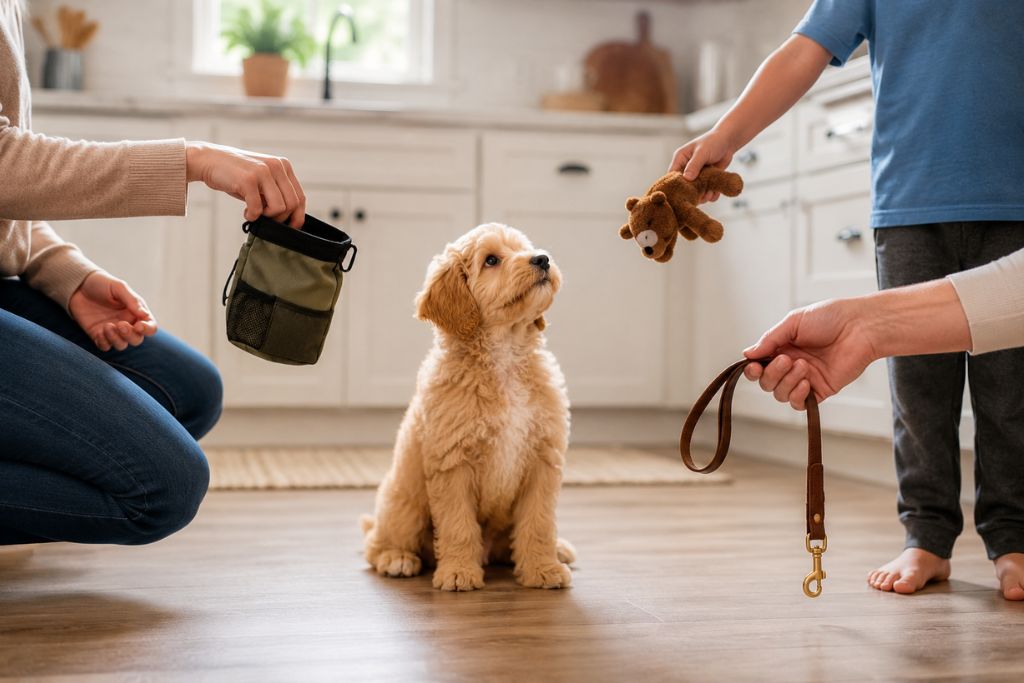
    Instead of closing the door right away, allow your puppy to explore the crate on their own. Place soft bedding inside and leave a few treats for them to discover.

    The goal is simple: help your puppy view the crate as a place worth choosing.

    Feed Meals Near the Crate

    Food can be a powerful training tool.

    Start by feeding meals beside the crate. As your puppy becomes comfortable, gradually move the food bowl closer and eventually inside.

    This helps create positive experiences and reduces hesitation about entering the crate. Consistency is one of the biggest factors in successful puppy training, whether you’re in Whitehouse Station or a neighboring community like Readington or Clinton.

    Make the Crate Part of Everyday Life

    Crates work best when they feel normal.

    Offer treats inside the crate. Toss in a favorite toy. Encourage short rest periods throughout the day rather than using the crate only when you’re leaving the house.

    The more positive experiences your puppy has there, the more comfortable they become. Many new puppy owners throughout Whitehouse Station and nearby communities along Route 22 find that regular crate time quickly becomes part of the daily routine.

    What If Your Puppy Cries?

    This is often the hardest part for puppy owners.

    A little whining can be normal, especially during the first few days. In fact, this is one of the most common questions we hear from new puppy owners in Whitehouse Station and throughout Hunterdon County.

    Your puppy is simply adjusting to a new environment and learning new routines.

    Before crating, make sure your puppy has had an opportunity to potty, stretch, and burn off some energy. Then keep departures calm and low-key.

    Most importantly, avoid turning every whine into a release from the crate. Consistency helps puppies learn that the crate is a safe place, not something to fear.

    Building Confidence Together

    At Furrylicious, we know that bringing home a puppy comes with plenty of questions. Crate training is often one of the first. Families from Whitehouse Station, Readington, Clinton, Lebanon, Branchburg, and communities throughout Hunterdon County rely on our team for guidance on training, nutrition, socialization, and everyday puppy care.

    We’re here to help you create positive experiences from day one.

    A Safe Space Can Make a Big Difference

    The best crate training happens gradually.

    With patience, consistency, and positive reinforcement, many puppies learn to see their crate as a place to relax rather than a place to resist. That’s why so many puppy owners throughout Whitehouse Station and the surrounding Hunterdon County area make crate training part of their puppy’s routine from the very beginning.

    And once that happens, you’ve given them something valuable: a space that feels safe, familiar, and entirely their own.

  • Puppy Zoomies at Night: How to Calm Evening Hyperactivity

    Puppy Zoomies at Night: How to Calm Evening Hyperactivity

    The puppy is home. Your days are filled with new routines, training sessions, playtime, and plenty of laughter. By evening, you’re ready to slow down, settle in, and enjoy a quieter pace.

    Throughout Calhoun and surrounding Gordon Country communities, new puppy owners quickly learn that no two days with a puppy are every quite the same.

    Your puppy, however, may have other plans.

    Suddenly they’re racing through the living room, darting from couch to hallway, grabbing toys at full speed, and acting as if they just drank three cups of coffee.

    Welcome to the evening zoomies. It’s something many puppy owners throughout the greater Northwest Georgia recognize almost immediately.

    While nighttime hyperactivity can be surprising, it’s actually a common part of puppy development. Understanding why it happens can help you manage it more effectively and create calmer evenings for everyone.

    What Are Puppy Zoomies?

    Zoomies are sudden bursts of energy that cause puppies to run, spin, jump, and play at high speed. You may also hear them referred to as FRAPs, or Frenetic Random Activity Periods.

    For young puppies, zoomies are a normal way to release physical and mental energy. In many cases, they’re not a sign that something is wrong. They’re simply a sign that your puppy is still learning how to regulate excitement and settle themselves.

    Why Zoomies Often Happen at Night

    Many puppy owners assume nighttime zoomies mean their puppy needs more exercise. Surprisingly, the opposite can sometimes be true.

    Puppies often experience evening zoomies when they’re overtired. Just like young children can become more energetic before bedtime, puppies can become overstimulated when they need rest.

    Other common triggers include a busy day, missed naps, excitement from family activity, or a sudden release of pent-up energy. A full afternoon spent exploring local parks, visiting family, or tagging along on errands around Calhoun and Adairsville can be surprisingly tiring for a young puppy.

    How to Help Your Puppy Settle

    Prioritize Daytime Rest

    Young puppies need significantly more sleep than most people realize. That’s easy to forget after a busy weekend spent exploring local events and outdoor spaces throughout Northwest Georgia. Regular naps throughout the day can help prevent overtired behavior later in the evening.

    Create a Predictable Evening Routine

    Consistent feeding, potty breaks, and quiet time help puppies understand when the day is winding down.

    Offer Calm Mental Enrichment

    Instead of encouraging high-energy games before bed, try a food puzzle, gentle training session, or chew activity.

    Reward Calm Behavior

    When your puppy settles quietly, offer praise or a reward. Over time, they begin to understand that relaxation is valuable too.

    Why Managing Zoomies Matters

    Occasional zoomies are perfectly normal. However, teaching your puppy how to settle is an important life skill.

    Learning to transition from activity to rest can help support better routines, improved focus, and a calmer household as your puppy matures.

    Guidance Beyond Puppy Day

    At Georgia Dog Club, we believe bringing home a puppy is just the beginning. Understanding behavior, building routines, and helping puppies develop confidence are all part of raising a well-adjusted companion.

    Adairsville, Resaca, and surrounding Northwest Georgia communities trust our team for guidance through those important early puppy milestones.

    The Good News About Zoomies

    The evening zoomies can feel chaotic in the moment, but they’re usually a temporary phase. With plenty of rest, consistent routines, and age-appropriate outlets for energy, most puppies learn to settle more easily as they grow.

    Until then, keep a sense of humor handy. Sometimes puppyhood comes with a few extra laps around the coffee table.

    If you’re up for another good read, these articles are a great place to start:

  • XO PUPS’ No Puppy Mill Pledge: What It Means for Families

    XO PUPS’ No Puppy Mill Pledge: What It Means for Families

    Bringing home a puppy is a big moment.

    For many families, it’s the beginning of years of companionship, adventures, and memories. It’s also a decision that comes with plenty of questions. Finding the right breed is important. Finding the right place to welcome that puppy from is just as important.

    That’s where things can get overwhelming.

    A quick online search can lead to countless websites, conflicting information, and unfamiliar terms. One phrase that often comes up is “puppy mill.” Understandably, many prospective pet parents want to know exactly where their puppy comes from and how it was raised.

    At XO PUPS, that commitment to transparency is reflected in our No Puppy Mill Pledge.

    We Partner With Responsible Breeders

    The foundation of the pledge starts with breeder selection.

    XO PUPS works with breeders who share a commitment to responsible breeding practices and animal welfare. Breeding programs are carefully evaluated before partnerships are established.

    This helps ensure puppies come from environments where proper care, attention, and health standards are priorities from the beginning.

    For families visiting from Chantilly Crossing, the Route 50 corridor, South Riding, and surrounding Northern Virginia communities, that added peace of mind matters. Knowing more about a puppy’s origins helps create confidence from the very start.

    Health and Wellness Come First

    A healthy start creates a strong foundation.

    Responsible breeders focus on proper veterinary care, nutrition, socialization, and age-appropriate development. These early experiences play an important role in helping puppies transition successfully into their new homes.

    When families near Fair Oaks Mall, Fair Lakes, Centreville, and Greenbriar begin searching for a puppy, health is often one of their biggest priorities. It’s one of ours, too.

    By prioritizing breeder standards and puppy wellness, XO PUPS helps set the stage for a positive experience for both puppies and their future families.

    Transparency Matters

    Trust is built through information.

    That’s why XO PUPS believes families should have access to details about their puppy’s background and breeder relationships. Understanding where a puppy comes from helps future owners make informed decisions.

    Many future puppy parents travel from Stone Ridge, Brambleton, Aldie, and western Fairfax County because they want transparency throughout the process. The goal is simple: fewer questions, greater confidence, and a smoother transition into puppy parenthood.

    Supporting Responsible Breeding Practices

    The No Puppy Mill Pledge isn’t just about avoiding poor practices. It’s about actively supporting better ones.

    Responsible breeders invest significant time, care, and resources into raising healthy puppies. They focus on animal welfare, proper housing, socialization, and ongoing care throughout the breeding process.

    Supporting those efforts helps encourage higher standards across the industry and gives families more confidence in the decisions they’re making.

    A Commitment to Puppies and Families

    Choosing a puppy should feel exciting, not stressful.

    At XO PUPS, we’re committed to helping families throughout Chantilly, South Riding, Centreville, Fair Lakes, Stone Ridge, Brambleton, Aldie, Ashburn, and neighboring Northern Virginia communities navigate the process with confidence. Many visitors also stop by from communities along Route 28 and throughout the Dulles South region because they value transparency and responsible sourcing.

    Our No Puppy Mill Pledge reflects our dedication to ethical breeder partnerships, puppy wellness, and providing families with the information they need to make informed decisions.

    The right puppy can change a home in the best possible way. Knowing that puppy came from responsible, caring origins helps make that journey even more rewarding.

    Looking for more puppy tips and tail-wagging fun? Check out our other blogs below for expert advice, breed insights, and everything puppy!

  • Aquarium Drama Queens: Fish With Main Character Energy

    Aquarium Drama Queens: Fish With Main Character Energy

    Every aquarium has that one fish.

    The one that starts trouble.

    The one that insists on being the center of attention.

    The one that somehow turns feeding time into a full-scale event.

    Fishkeeping forums are filled with stories about them. Hobbyists near The Promenade Bolingbrook swap stories about them. Experienced aquarists around Hoffman Estates, South Barrington, and the Poplar Creek area laugh about them because they’ve probably owned one.

    Some fish simply come with larger personalities than others. That’s part of what makes the hobby so much fun.

    It’s also why compatibility and tank planning matter so much. A fish that thrives as the star of one aquarium might create chaos in another. Before adding new residents to your tank, let’s meet some of the biggest drama queens in the aquarium world.

    Bettas: The Tiny Royalty of the Tank

    Bettas are beautiful, colorful, and completely convinced the aquarium belongs to them.

    Many male Bettas are highly territorial and won’t hesitate to challenge rivals. Sometimes the rival is another fish. Sometimes it’s their own reflection.

    For hobbyists around Schaumburg and Hoffman Estates, Bettas remain one of the most popular aquarium fish for good reason. They have incredible personalities and can thrive in the right setup.

    Tank planning tip: Give Bettas plenty of space, hiding spots, and carefully selected tankmates.

    Oscars: The Bulldozers With Feelings

    Oscars often behave less like fish and more like demanding pets.

    They recognize their owners, learn feeding routines, and seem to have opinions about everything. They also enjoy rearranging decorations that took you an hour to position perfectly.

    Aquarists near The Arboretum of South Barrington frequently fall in love with Oscars because of their intelligence and interaction.

    Tank planning tip: Oscars grow large and need significantly more space than many beginners expect.

    Cichlids: Masters of Aquarium Politics

    Some fish have territories. Cichlids have kingdoms.

    Many species establish boundaries and spend their days making sure everyone else knows where those boundaries are. They are fascinating, active, and full of personality.

    They can also be surprisingly stubborn.

    Tank planning tip: Research specific cichlid species before building a community tank. Temperaments vary widely.

    Angelfish: Graceful Until Proven Otherwise

    At first glance, Angelfish seem like the diplomats of the freshwater world. Elegant fins. Calm swimming patterns. Sophisticated appearance.

    Then they decide a section of the aquarium belongs exclusively to them.

    Fishkeepers throughout Bolingbrook and the Boughton Road corridor are often surprised by how protective Angelfish can become.

    Tank planning tip: Account for their mature size and territorial behavior when selecting companions.

    Tiger Barbs: The Neighborhood Instigators

    Tiger Barbs never seem to run out of energy. They’re active, entertaining, and constantly looking for something to do.

    Unfortunately, that “something” can occasionally involve pestering slower tankmates.

    A properly sized school usually helps direct that energy where it belongs.

    Tank planning tip: Tiger Barbs tend to do best in groups and with compatible, active species.

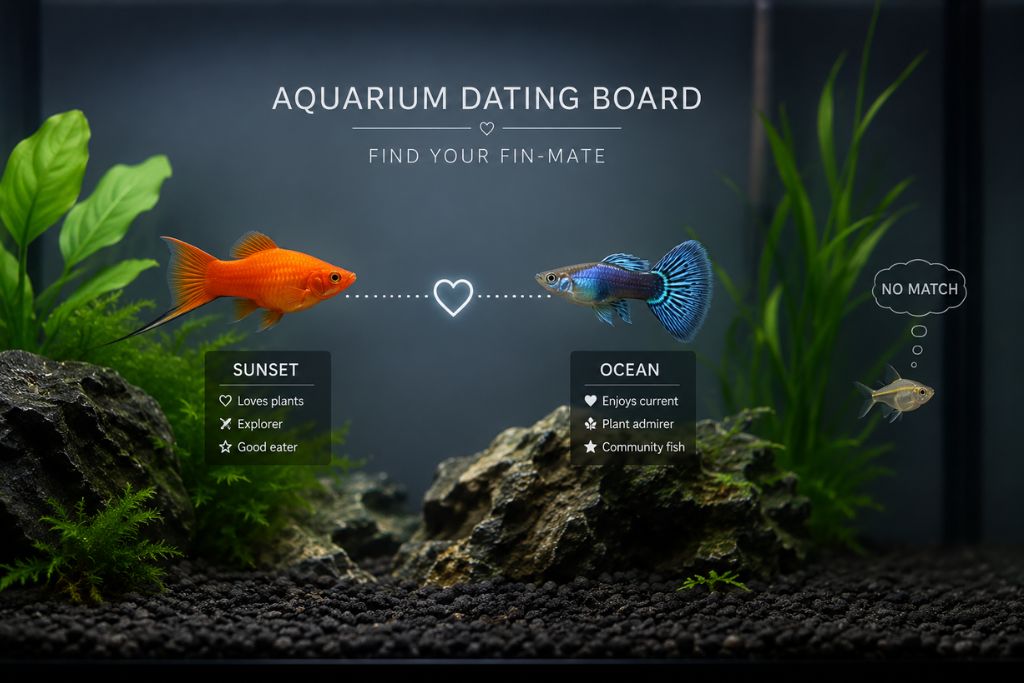
    Great Aquariums Start With Great Matchmaking

    The most successful aquariums aren’t built around appearances alone. They’re built around behavior, compatibility, and planning.

    At Aquarium Adventure, we help hobbyists throughout Hoffman Estates, Bolingbrook, Streamwood, South Barrington, and surrounding communities choose fish that fit their tanks and their goals. Visitors stop in from near NOW Arena, The Promenade Bolingbrook, and beyond for advice that helps set aquariums up for success.

    A little personality makes every aquarium more interesting. The trick is making sure all those personalities can live together peacefully once the drama is over.